
Geometric Art Explained: Style Your Home with Ease
Key Takeaways
- Geometric art uses precise shapes, color, and spatial relationships to create balanced, often abstract compositions;
- The movement expanded in the 20th century through Suprematism, De Stijl, Bauhaus, Minimalism, and Op Art, and continues in digital art today;
- Its clarity and symmetry make it ideal for modern home decor and pairing with personal photos;
- You can create striking geometric-inspired gallery walls with Mixtiles using grid layouts, color blocking, and simple frames.
Wondering what is geometric art and why it looks so good on your walls? Think circles, squares, and lines arranged for calm rhythm and clean order. This branch of abstract art rose in the 20th century, then influenced modern art, design, and today’s geometric abstraction in digital media. Below, learn the core idea, the main movements and artists, and simple tips to get a gallery wall you love, made easy with Mixtiles adhesive, repositionable frames.
Create a geometric-inspired gallery wall in minutes. Our app makes it easy to arrange your favorite photos into stunning wall arts, no nails, no damage.
What is geometric art?
Geometric art is art based on geometric shapes, such as circles, triangles, squares, and straight lines. It favors form, color, and proportion over realism, so the work feels ordered, minimal, and modern.
Core traits include repetition, symmetry or purposeful asymmetry, clear edges, and bold contrast in black and white or primary red, blue, and yellow. A famous early example is Kazimir Malevich’s Black Square, a pivotal painting for geometric abstraction.
How did geometric art evolve into what we love today?
It grew from early 20th century movements into a versatile style seen in interiors and digital art, shaped by artists who explored pure forms and color relationships.
Key 20th-century movements at a glance
|
Movement |
Artists |
Signature elements |
|---|---|---|
|
Suprematism |
Kazimir Malevich |
Pure shapes; Black Square; spiritual abstraction. |
|
De Stijl |
Piet Mondrian, Theo van Doesburg |
Grids; primary colors; straight lines; harmony. |
|
Bauhaus |
Josef Albers |
Color studies; design integration; disciplined forms. |
|
Minimalism |
Frank Stella, Sol LeWitt |
Reduction; serial systems; industrial clarity. |
|
Op Art |
Bridget Riley, Victor Vasarely |
Optical effects; vibrating patterns; movement. |
Why does geometric art look so good in home decor?
Its visual order reduces clutter, its simple forms mix with Scandinavian, mid-century, Japandi, or eclectic style, and its clean geometry pairs beautifully with family photos. You get a flexible language of forms that can frame memories without overpowering them.
Test-drive a geometric grid. Use our lightweight photo tiles to try layouts, peel, stick, and adjust for perfect spacing. Prefer a damage-free approach across the home? See our guide to hanging wall art without nails.
How can you style a geometric gallery wall with Mixtiles?
Start with a simple structure, then let color and rhythm do the work. Square canvas prints make alignment easy, and consistent spacing creates that gallery-grade finish. Not sure which tile size fits your space? Use our wall art size guide.
Quick layout ideas

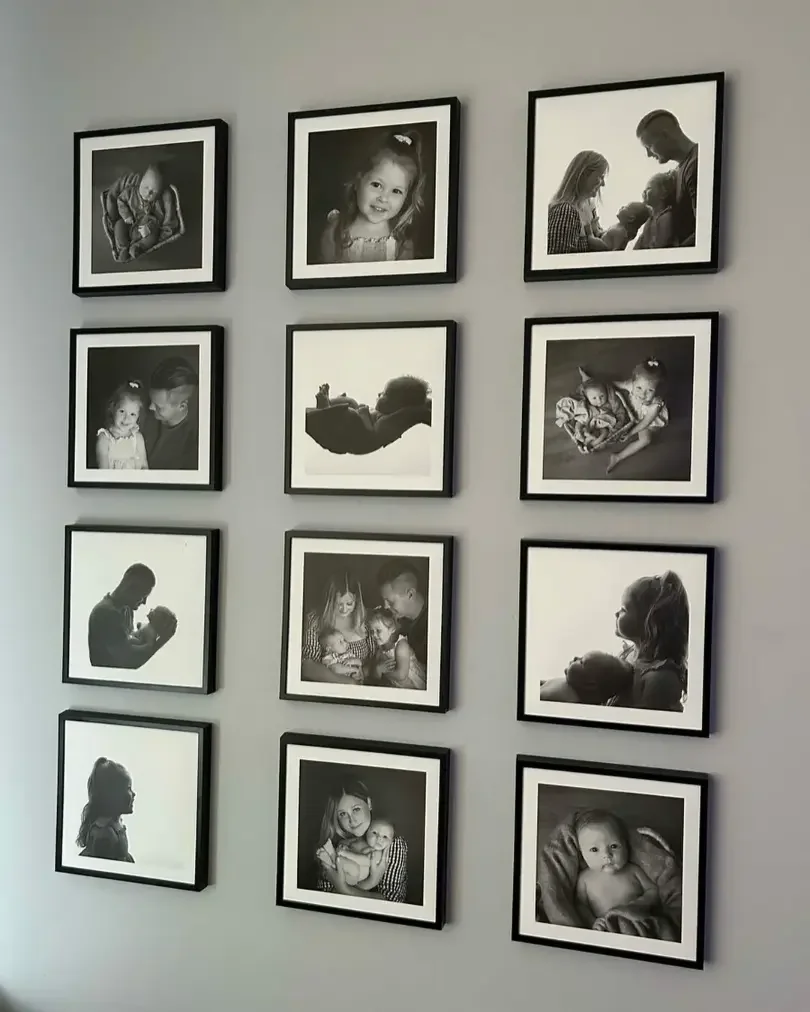
Classic grid: Build a 2×2, 3×3, or 4×3 of squares for instant symmetry.

Checkerboard color: Alternate color images with black-and-white for crisp contrast;

Color block: Group warm and cool tones in distinct zones for balance;

Linear band: Run one precise row across a hallway or above a sofa for a minimal statement.
If you are planning a row above a sofa or along a hallway, consult our guide on how high to hang art on a wall for eye-level placement.
Pro tips
Keep 1.5 to 2 inches between tiles; align top edges or centers; limit the palette to two or three dominant colors; choose simple black or white frames to emphasize the shapes and negative space. Need a step-by-step on composition and spacing? Explore how to arrange art on a wall.
Now that you know what is geometric art, try a calm grid, balanced spacing, and a tight palette. With Mixtiles peel-and-stick photo tiles, you can create, place, and refine a geometric gallery wall in minutes.
Ready to build your geometric wall? Turn your photos into beautiful canvas prints. Create a crisp grid gallery today with our 8x8 canvas photo prints, perfect for symmetrical layouts. Enjoy free shipping, no nails, and damage-free walls.
Frequently Asked Questions
What does geometric mean in art?
In art, geometric refers to compositions built from basic shapes like circles, squares, triangles, and straight lines. Artists emphasize order, proportion, and clear edges, often abstracting reality to create balance and rhythm that feel clean, modern, and minimal.
What is the geometric art style?
The geometric art style, often called geometric abstraction, uses simple shapes and structured color to create nonrepresentational images. It flourished in the 20th century through movements like De Stijl and Bauhaus, yet its roots appear in ancient patterns and continue in digital design today.
What are the key elements of geometric art?
Core elements include circles, squares, and triangles, precise lines and edges, repetition, symmetry or planned asymmetry, and disciplined color palettes. These choices create harmony and contrast, which is why geometric works suit clean frames and grid-style gallery walls at home.


Be the first to know — deals, news & decor ideas.
By clicking you agree to the Terms of Use & Privacy Policy