Retro Wall Decor Ideas: Create Your Gallery Wall Today
Key Takeaways
- Retro wall decor ideas blend mid-century, 70s, and 90s elements. Think bold color, graphic prints, and nostalgic textures you can recreate without drilling;
- Photo-led gallery walls using Mixtiles make retro styling renter-friendly, with lightweight frames, adhesive backing, and easy repositioning;
- Mix eras and materials, vintage finds, posters, record sleeves, mirrors, and neon, with cohesive palettes and repeat motifs for balance;
- Plan before you hang, map your layout, pick a palette, and use Mixtiles to swap, scale, and refresh seasonally without wall damage.
Retro is back because it is personal, playful, and surprisingly easy to pull off. From mid-century shapes to 70s color stories and 90s nostalgia, the right wall decor turns any blank surface into a time-traveling moment. In this guide, you will find practical, renter-safe retro wall decor ideas, plus layout tips, color cues, and budget-friendly ways to mix art, photos, and vintage treasures. We will also show you how Mixtiles makes it effortless to design, hang, and restyle your retro gallery wall without nails.
Bring your retro vision to life. Turn your favorite photos into stunning custom canvas prints or explore our collection of wall arts for instant inspiration. Order online and stick them up in minutes, no nails required.
What makes wall decor feel “retro,” exactly?
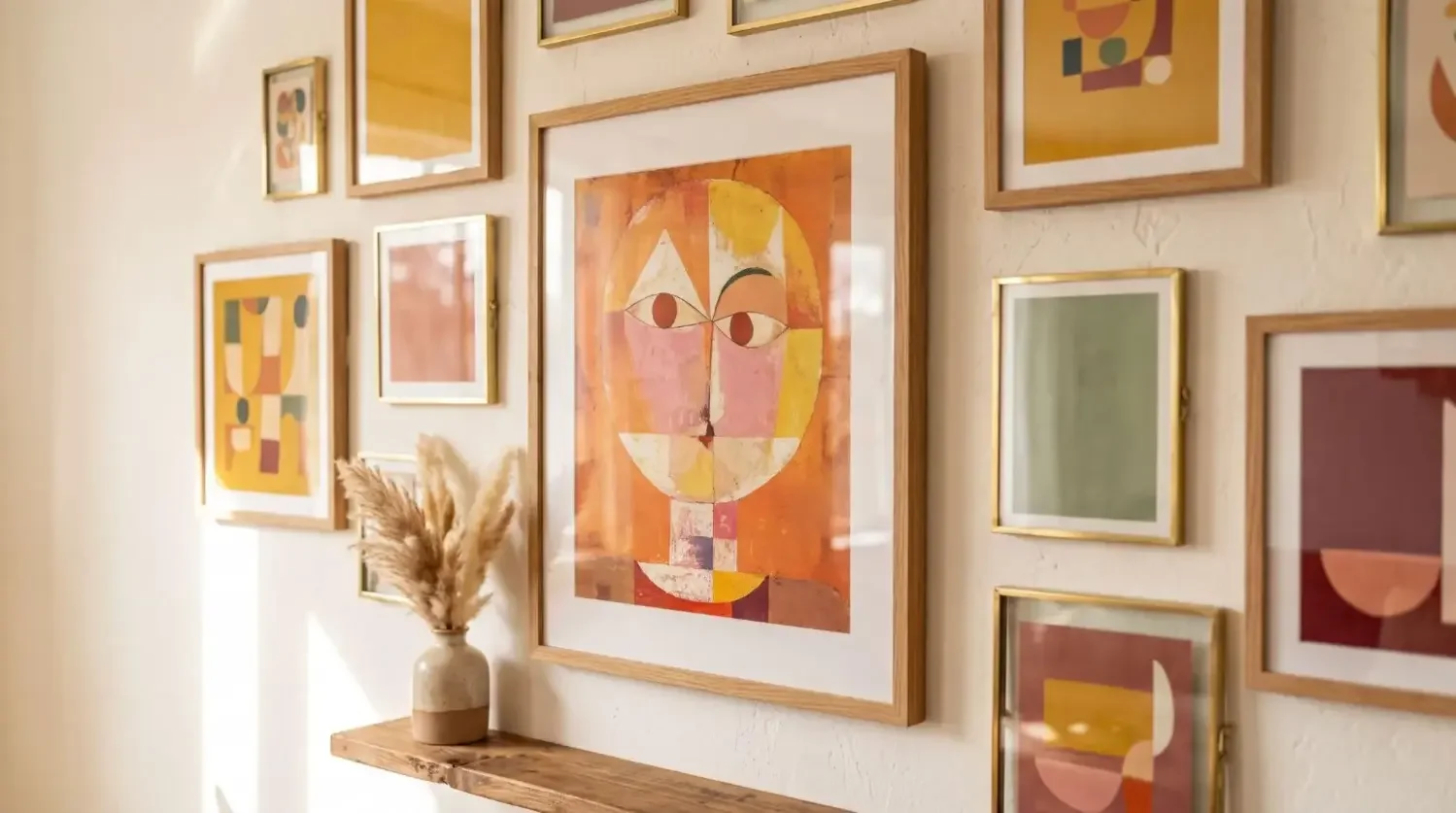
Retro style starts with recognizable eras and their shapes, colors, and materials. Mid-century modern design leans on clean lines, geometric patterns, teak and walnut wood, mustard and teal. The 70s groove brings warm earth tones like rust, avocado, camel, and curved, wavy motifs. The 80s and 90s lean graphic and playful with black and white contrasts, neon accents in magenta, cyan, lime, and Memphis-inspired shapes.
For authentic details, look to type-driven posters, travel ads, vintage wall signs, album covers, botanical studies, and film photography or black and white art prints. Textures complete the mood: brass, rattan, tinted glass, and matte framed finishes sit beautifully on white walls or bold color blocks. Mix classic subjects like nature or music with pop art, abstract retro art, and vintage art prints for a curated collection that still feels modern.
How do you build a retro gallery wall without nails?
The simplest way to get a clean, classic gallery wall fast is to use Mixtiles. Tiles are lightweight and come with stick-and-restick adhesive or a magnet system, so you can place, adjust, and move them without tools. They work on painted walls, many textured walls, wood paneling, wallpaper, brick, and cement. This makes experimenting with different styles painless in your living room, bedroom, kitchen, or office. If you are renting or avoiding damage, follow our guide on how to hang wall art without nails.
Fast layout formula
Start with one hero piece at the center, such as a large retro wall art poster or your favorite framed photo tile. Build symmetry by adding a pair of tiles to the left and right, then mirror the move above and below. Finish the edges with smaller prints so the outer line feels even. If you prefer an organic layout, keep the center of the composition stable and vary the edge heights slightly so the composition has a soft 70s flow. For more arrangement strategies, explore our tutorial on how to arrange art on a wall.
Spacing and scale guide
Keep the center of the arrangement around 57 to 60 inches from the floor so it reads at comfortable eye level. For precise placement by room, see our guide on how high to hang art on a wall. Aim for consistent spacing between tiles at about 1.5 to 2 inches, roughly 4 to 5 centimeters. Mix one or two large anchors with several medium or small tiles for balance. You can also reference our wall art size guide to pick the right tile dimensions. Use the table below to match wall size to common Mixtiles sizes and spacing.
|
Wall width |
Suggested tile sizes |
Typical count |
Spacing |
|---|---|---|---|
|
36 to 48 in, 91 to 122 cm |
8.4 × 8.4 in, 21.35 × 21.35 cm |
6 to 8 tiles |
1.5 to 2 in, 4 to 5 cm |
|
48 to 72 in, 122 to 183 cm |
12.44 × 12.44 in, 31.6 × 31.6 cm |
6 to 10 tiles |
1.5 to 2 in, 4 to 5 cm |
|
72 to 96 in, 183 to 244 cm |
19.5 × 19.5 in or 19.5 × 27 in, 49.53 × 49.53 cm or 49.53 × 68.58 cm |
4 to 6 anchors plus 4 to 8 smaller tiles |
1.5 to 2 in, 4 to 5 cm |
Which color palettes instantly read retro?
Mid-century palettes use mustard, olive green, teal, and warm walnut accents that look great with black frames for definition or wood frames for a softer touch. The 70s often blend rust, burnt orange, avocado, and camel against creamy white or tan walls. The 80s and 90s skew graphic: black and white with neon pops or saturated blue, red, and yellow. To refine your interior design, keep one hue consistent across your gallery, then echo it in pillows, a rug, or a small sign.
What are the easiest retro wall decor ideas to try first?
Test the look with simple, high-impact moves that work in any room or apartment layout.
- Photo tiles with retro filters, try grain, sepia, or soft fade for a vintage style finish;
- Vintage travel or movie posters reprinted as Mixtiles, instant retro wall art;
- Record sleeve grid, classic music artwork in a tidy matrix across your wall;
- Botanical or space-age illustrations, perfect for a study, hallway, or dining room;
- Retro typography quotes, 60s serif, 70s bubbly, or 90s pixel type for a bold sign;
- Mini corner galleries above a bar cart or nightstand, two to four tiles to define the space.
Test-drive your layout before you hang. Use the Mixtiles app to preview your photo tiles, swap images, and plan spacing. Then stick, step back, and tweak in seconds.
How can you mix vintage finds with modern pieces without clashing?
Choose a clear through line. Repeat a color family like green, orange, or yellow, or choose a motif like stripes, waves, or circles to tie different art prints together. Keep a clean 70 to 30 ratio: mostly modern framed tiles for consistency, then layer in a few vintage wall accents such as a brass mirror, a small wood shelf, or a retro neon sign. Anchor with one era, for example a 70s palette, and sprinkle in mid-century shapes or 90s posters to add personality.
Where do retro wall decor ideas shine in each room?

In the living room, place a large anchor print at the sofa center, then flank with black framed photo tiles or vintage art prints. Brass sconces or a small mirror adds depth.

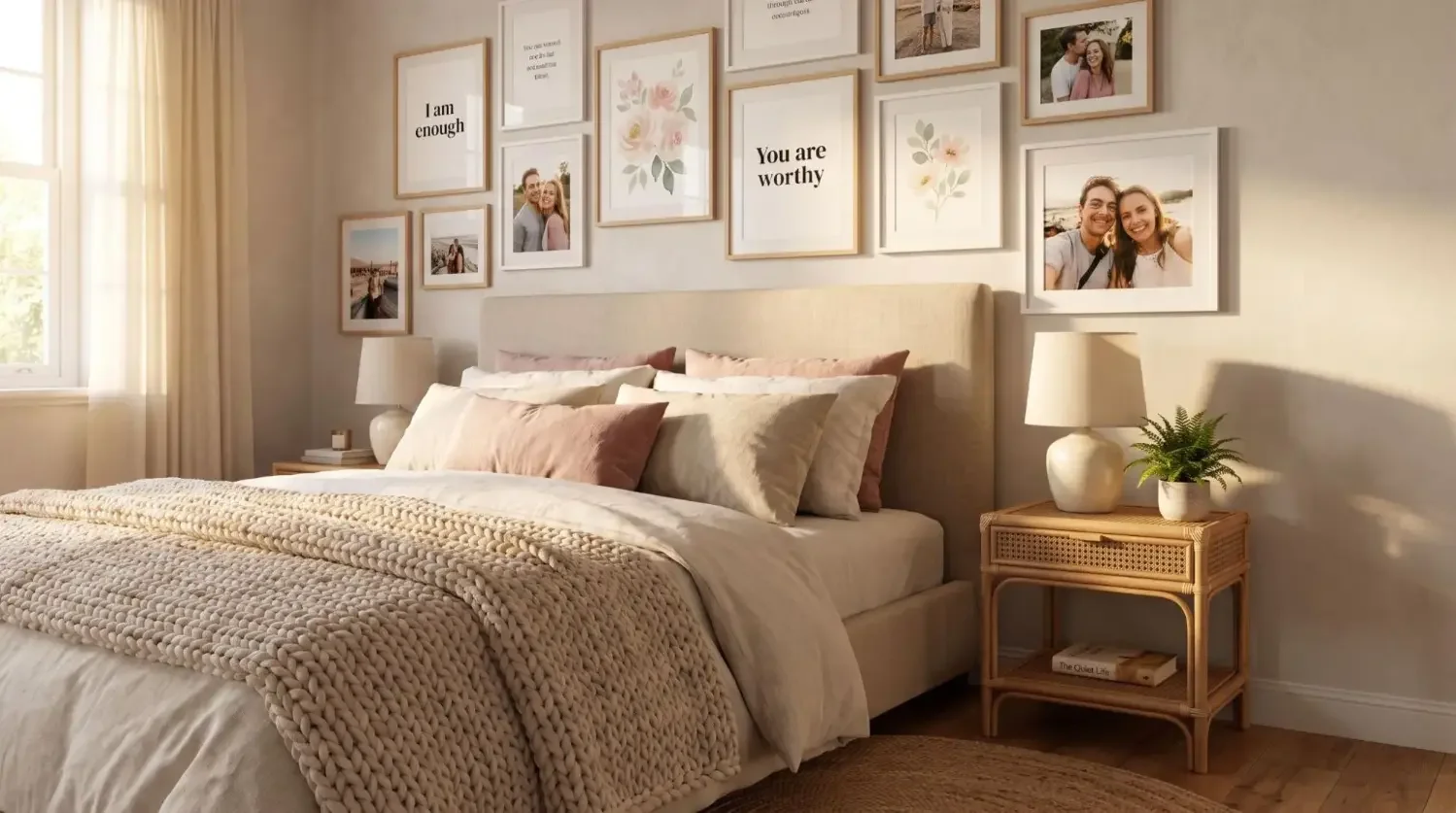
In the bedroom, build a soft-toned photo grid above the headboard using black and white portraits or nature prints.

For the kitchen, create a mini gallery of recipe scans, diner-inspired typography, fruit botanicals, and a slim wall sign.

In the office, go graphic with retro calendars, abstract shapes, and inspirational posters in classic type to keep your home workspace energized.
How do you plan your wall like a pro?
A little prep helps you get a balanced gallery on the first try. Measure, select your anchors, and refine the mix before you peel the adhesive. You will save time and keep your walls looking crisp.
Pre-hang checklist
Use this quick list to get accurate sizing and a cohesive collection every time.
- Measure wall width and height so you know your maximum layout size;
- Choose one or two anchor pieces, then gather supporting tiles in related colors and styles;
- Select 7 to 12 cohesive images, mix photos, posters, and vintage art for interest;
- Wipe the wall with a dry cloth and mark eye level at 57 to 60 inches for reference.
Paper-on-wall mockup (or digital with Mixtiles)
Tape paper cutouts that match your tile sizes directly on the wall to test spacing. Snap a few photos to compare options, then pick the best balance. You can also preview layouts in the Mixtiles app and swap frames or borders before ordering. When you are ready, press each tile firmly for a few seconds so the adhesive seats well, especially on textured walls.
Can photos become “retro art” even if they’re new?
Absolutely. Shoot with warm white balance and add subtle grain for a film look. Try direct flash for that 90s party vibe, or frame classic cars, diners, marquee signage, vintage typography, and geometric tile floors for instant nostalgia. To revive old family photos, scan them, remove dust, add a gentle fade, and print as tiles. The result feels like a curated vintage art collection that still speaks to your life today.
What budget-friendly retro wall decor ideas actually look elevated?
Blend personal photos with affordable or free art sources and a few choice accents for a high-end finish.
- Mix public domain posters and free vintage art downloads with your photos in Mixtiles for a custom gallery wall;
- Thrift maps, sheet music, menus, or postcards, then photograph or scan and print them as a coordinated set;
- Rotate seasonally, store extra tiles flat with wax paper over the stickies, and refresh your walls quarterly without buying new frames.
How do lighting and texture complete the look?
Use warm bulbs for a 60s to 70s glow, or add subtle color LEDs for an 80s to 90s edge. A small gold or smoked-glass mirror among matte tiles introduces reflection and depth. Green plants or a slim ledge near your gallery soften the composition. A lava lamp or fiber-optic accent can echo retro shapes and colors without overwhelming the art.
What are some seasonal retro refresh ideas?
In spring, try pastel botanicals, vintage travel ads, and soft film photos. For summer, bring in surf posters, motel signage, and pop colors like red and blue. In autumn, lean into rust, orange, olive, and vintage book covers. Winter loves classic cinema posters, record sleeves, and monochrome photography in black frames for a crisp contrast on white walls.
Retro wall decor is a mood, a memory, and a style, all in one. With the right palette, a few nostalgic prints, and renter-safe photo tiles, you can tell your story across decades without drilling a single hole. Whether you are channeling mid-century modern calm, 70s warmth, or 90s neon, planning is simple, and refreshes are instant, when your gallery wall is built to move with you.
Ready to design your retro photo gallery wall? Open the Mixtiles app, choose your favorite photos or vintage-inspired art, and stick them up in minutes. No nails, no stress, just all the retro vibes.
Frequently Asked Questions
What colors and patterns instantly make a wall feel retro?
Try mustard, olive, avocado, teal, rust, and camel, or black and white with neon accents. Patterns like waves, stripes, checkerboard, starbursts, geometrics, and mod florals read vintage. Pick two or three hues, repeat them across art, textiles, and small accents.
How can I mix different retro eras without clashing?
Select one anchor era or palette, then add a smaller portion from another period. Keep frames or mats consistent, repeat a motif like circles or checkerboard, and vary scale for rhythm. Let one hero piece lead the story, then echo its colors nearby.
What renter-friendly ways can I hang retro wall decor without damage?
Use removable adhesive strips and hooks for lightweight frames, poster putty for small prints, and washi tape for temporary borders. Try magnetic paint with magnets, leaning picture ledges, or grid panels that rest on the floor. Test adhesives on a hidden spot first.
How can I find affordable retro wall art or create my own?
Browse public domain archives and vintage ad libraries, or thrift record sleeves, maps, and magazines to scan and reprint. Photograph neon signs, diners, and classic cars, then add grain or warm tones for a film look. Mix reprints with personal photos for character.

Be the first to know — deals, news & decor ideas.
By clicking you agree to the Terms of Use & Privacy Policy